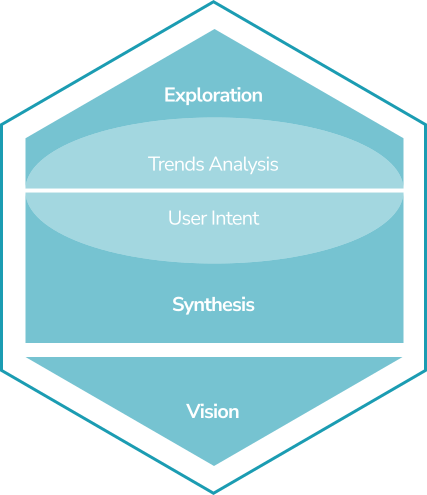
Anticipate
What is emerging, and what does it mean for users?
Investigate trends, behaviours, and signals to understand what's coming next, and ground the system in real user intent before you design anything.

Exploration
What forces are shaping the future?
Scan the outside world and surface the user's real goal before committing to a direction.
A scan across five forces (Social, Technological, Economic, Environmental, Political) for emerging trends and weak signals.
Read the guide →
The three-layer model (Intent at the core, wrapped by Workflows, wrapped by Algorithms) plus a gap check.
Read the guide →
Three linked jobs (functional, emotional, and social) scored by importance × dissatisfaction.
Read the guide →
Sorting signals by time-depth with the Three Horizons: H1 (0–2y), H2 (2–5y), H3 (5y+).
Read the guide →

Synthesis
What patterns emerge?
Turn scattered signals into the few tensions that will define the product.
Affinity clustering of your Exploration outputs into themes, then naming the tensions that matter.
Read the guide →
An audience factor profile (“a person in a situation, not a demographic”) with jobs, behavioural stage, and how they evolve.
Read the guide →

Vision
What futures are you designing for?
Set the future worth building toward, and the one the design must prevent.
Two paired statements: the desired 5-year future and the undesired one the design must prevent.
Read the guide →
A right-to-left milestone chain from the 5-year future back to the first 30-day action.
Read the guide →