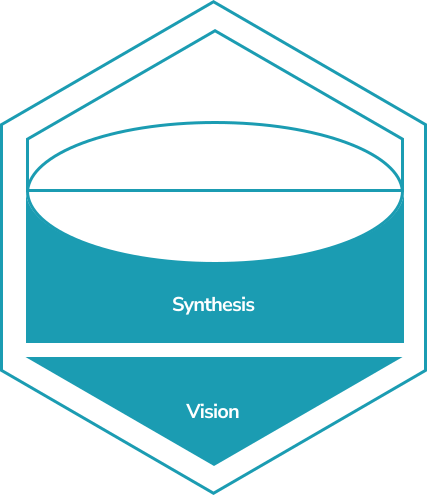
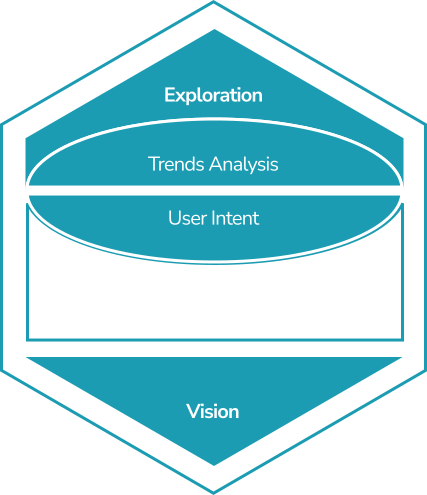
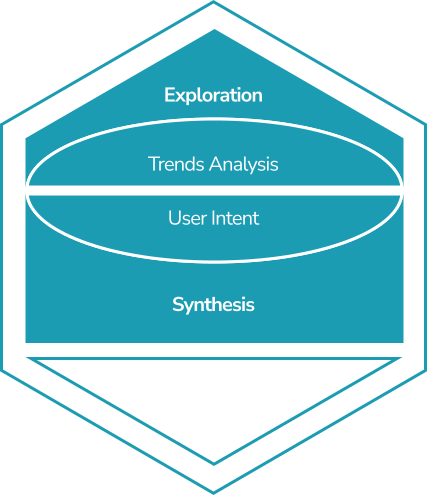
01Investigative: Observe patterns, question assumptions.
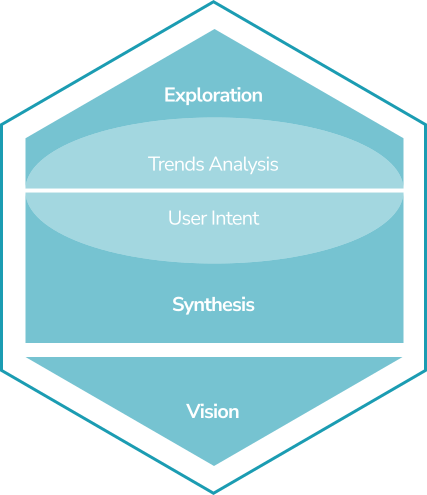
Anticipate
What is emerging, and what does it mean for users?
- Exploration
- Synthesis
- Vision
Anticipatory Design is a three-part methodology (Anticipate, Imagine, Shape) and a guided workspace. It helps teams model user intent, design adaptive system behaviour, and craft proactive UI, so the product acts before the user has to prompt it.
Most AI still hands the whole job to the user. A blank prompt box, a static form, a chat window: each one assumes the person already knows what to ask, when to ask it, and how to phrase it. That’s the reactive trap, and it puts the entire cognitive load on the one person the system was supposed to help.
But proactivity is risky: act at the wrong moment and you get Clippy. Getting it right takes a structured method: one that balances automation against user agency, deliberately, at every step.
Each phase breaks into UX chunks that carry a team from abstract foresight to production-ready UI. Read a playbook for the full method, or run the phase in the workspace.
Forecasting predicts. Foresight prepares. Anticipation acts.
01Investigative: Observe patterns, question assumptions.
What is emerging, and what does it mean for users?
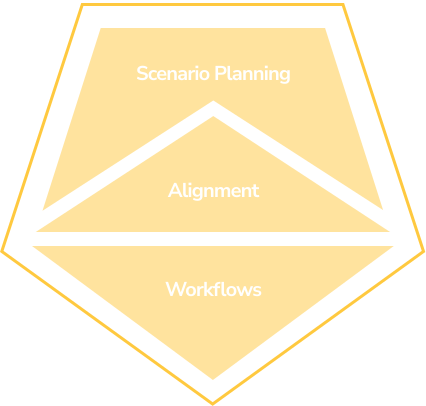
02Speculative: Envision alternatives, embrace ambiguity.
What futures are possible, and how do we design for them?
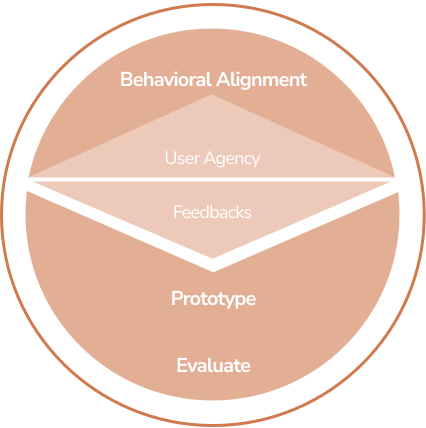
03Iterative: Test, refine, and remain open to feedback.
How do we make it real, and keep it relevant?
Stop arguing over AI behaviour in Slack threads. Work through the phases together, in one place.
Interactive prompts walk design and product through all three phases (one chunk at a time) so nobody's staring at a blank template.
Guardrails that keep proactive interventions inside your privacy and user-agency guidelines, so “helpful” never tips into “intrusive.”
Generate structured tickets and handoff-ready documentation your engineers can build from, not a doc that dies in a folder.
Architecting a new AI-native product where a blank chat box is the wrong interface, and the system should take the first move.
Cutting repetitive enterprise workflows with context-aware default states that anticipate the next step instead of waiting to be told.
Designing assistants that offer help at the exact moment of friction, without becoming the thing users reach to switch off.
Anticipating what people will need isn’t a step in a pipeline. It’s one of four questions every AI team keeps asking, in whatever order the work demands. They reinforce each other: what you anticipate shapes what you measure, who you map, and what you have to comply with. This is where the Anticipatory Framework takes on the anticipating.
It's sharpest on probabilistic, adaptive systems: anywhere the product acts on its own initiative. But the method (model intent, design behaviour, shape the UI) applies to any product that wants to anticipate rather than react. Traditional software gets most of its value from the Anticipate phase; AI-native products use all three.
The playbooks (/framework/anticipate, /imagine, and /shape) are the open methodology: the theory, activities, and templates, free to read. The guided workspace is where your team applies them to a real project: the same phases as interactive canvases, with your inputs saved, structured, and exportable.
That's the whole job of the Imagine and Shape phases. You calibrate confidence thresholds so the system only acts when it's sure enough, design fallback paths for when it isn't, and set an autonomy level matched to the stakes, with override controls that keep the user in charge. Proactivity without agency is what created Clippy; the framework designs the agency back in.
Yes. Each phase produces a structured spec you can export as handoff-ready documentation and tickets, built to drop into your existing design and engineering flow rather than live somewhere no one looks.
More questions? See the full FAQ →
Start modelling proactive AI experiences today. Free to start, no credit card required.
One account · Includes all 3 framework phases · Export specs anytime